
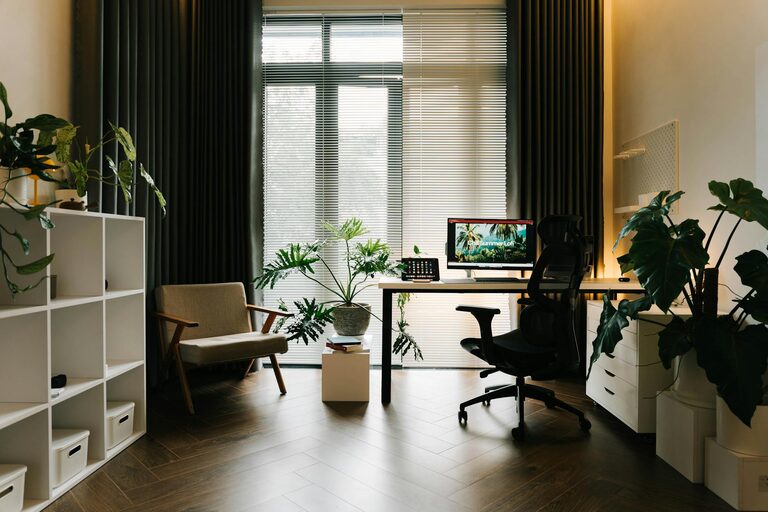
Creating a home office that is both cozy and productive can significantly enhance your work-from-home experience. Whether you’re a remote worker, freelancer, or need a dedicated space for personal projects, designing a workspace that feels inviting and helps you focus is key. In this post, we’ll explore practical tips to help you craft a home office that supports your productivity while keeping comfort in mind.
Why a Cozy Home Office Matters
A workspace that feels cozy can reduce stress, improve concentration, and make spending hours working more enjoyable. Comfort doesn’t just mean plush furniture; it’s about creating an environment that nurtures creativity and helps you stay organized.
Choosing the Right Location
Find a Quiet Spot
Select a location in your home away from high-traffic areas to minimize distractions. This could be a spare room, a corner in your bedroom, or an unused nook.
Consider Natural Light
If possible, position your desk near a window. Natural light enhances mood and helps reduce eye strain, making it easier to stay alert and productive throughout the day.
Furniture for Comfort and Efficiency
Invest in an Ergonomic Chair
A chair that supports good posture is essential. Look for chairs with adjustable height, lumbar support, and comfortable cushioning to avoid back and neck pain.
Desk Choices
Choose a desk that fits your space and work style. A desk with enough surface area helps keep essentials within reach without clutter. Standing desks or adjustable desks can also be beneficial to switch between sitting and standing.
Lighting Tips
Use Layered Lighting
Combine natural light with task lighting and ambient lighting. A good desk lamp can reduce eye strain, while soft overhead lighting prevents harsh shadows.
Avoid Glare
Position your screen and lighting sources to minimize glare. Use blinds or curtains on windows if the sunlight is too strong.
Organizing Your Workspace
Declutter Regularly
Keep your desk clear by only having daily necessities on it. Use drawers and shelves to store supplies and paperwork out of sight.
Use Organizers and Storage Solutions
Desk organizers, filing trays, and shelves can keep items neat and easy to find, saving time and reducing stress.
Cable Management
Keep cords tidy with clips or cable sleeves to avoid a messy look and tripping hazards.
Personal Touches That Boost Comfort
Add Plants
Plants improve air quality and add a calming presence to your space. Choose low-maintenance options like succulents or pothos.
Use Soft Textiles
A cozy rug, cushions, or a throw blanket can make your space feel warm and inviting.
Incorporate Your Style
Include artwork, photos, or decorative items that inspire you. A pleasant environment can increase motivation and creativity.
Technology Setup for Productivity
Reliable Equipment
Ensure you have the right computer, printer, and other tools you need for your work. Test internet speed to avoid interruptions during virtual meetings.
Dual Monitors
If your work involves multitasking, dual monitors can increase efficiency and reduce the time spent switching between tabs.
Headphones or Speakers
Good quality headphones can help block out noise, while speakers provide clear audio for calls and breaks.
Maintaining Work-Life Balance
Set Boundaries
Try to keep your work area distinct from relaxation spaces, even if in the same room. Physically closing a door or packing up at the end of the day helps create a mental separation.
Schedule Breaks
Incorporate short breaks to stretch, walk, or rest your eyes. This helps maintain energy and focus throughout the day.
Final Thoughts
Creating a cozy and productive home office doesn’t require a complete renovation or expensive purchases. Focus on comfort, organization, and thoughtful design to build a workspace that supports your needs and enhances your daily work routine. By tuning into your personal preferences and making small adjustments, you can transform your home office into a space where you want to spend your time—and where you can produce your best work.